We invite you to look around the ESSSB21 Artistic program, taking place throughout the conference.
We warmly invite you to explore the ESSSB21 Artistic Program throughout the conference. The program brings together a selection of artworks and activities, including sculptures, performances, installations, and workshops. The schedule and duration of each event can be found in the individual descriptions below.
What can art contribute to suicidology? As ESSSB21 invites us to Rethink Suicidology, we also invite you to reconsider how we talk about, study, and experience suicidality. Alongside the scientific program, the Artistic Program offers another way of engaging with the conference theme – through images, sound, different materials, and shared experiences. Some works are grounded in research, others in lived experience or artistic practice, but all offer an opportunity to pause. We hope these works inspire curiosity and conversation.
Artistic program curator: Dr. Miglė Marcinkevičiūtė.
Artistic program is supported by:
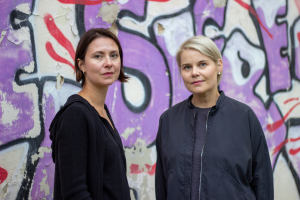 Textiles, 2026
Date: August 26-29, 2026
Time: Throughout the conference hours
Location: Lobby of the Conference Center
Project description:
During the conference, the artists of Handwork will invite the conference participants to engage in a performative action – to dismantle an art installation and become co-authors of the artwork “One Knot. A Thousand Possibilities”. The artwork is composed of numerous knots joined together into a single textile mass, and participants are invited to untie at least one knot or loosen the entangled areas, thereby freeing the intertwined fabric. Although, semantically, taking apart, knocking down is considered a destructive act, in this case the loosening of the knots symbolizes the removal of the problems, risk factors, and tensions associated with mental health. In both cases, this requires tangible physical effort – both individual and collective – and the completed action reflects the process of prevention and the path towards seeking help. Just as the outcome of every healing process can only be anticipated, the artists likewise keep secret what will be revealed once the complex structure has been dismantled. Through this work, the artists seek to encourage reflection on the importance of community involvement, support, and the search for solutions and possible ways forward.
About the Artists:
HANDWORK is a studio-workshop space founded in 2020 by artist duo Dileta Deikė and Jelena Škulis which takes place on Vitebsko str. 23, cultural center SODAS2123, Vilnius, Lithuania.
The aim of HANDWORK is to explore manual activities through practice and rethink them throughout frames of history, philosophy, and daily life experience, involving the community in the processes.
Jelena Škulis (b. 1982) is a doctor of Arts, educator, and researcher whose practice is grounded in material sensitivity and community engagement. With academic training in social sciences (psychology) and a doctorate in visual arts, she builds her practice around handwork, slow text weaving, feminism, everyday language, the paraphrasing of diverse materials, and performative actions, aiming to be a part of the communities she works with.
Dileta Deikė (b. 1980) is a textile artist who graduated in textile art and design and has worked in the field of design for years. Currently she is the initiator and author of creative projects whose main areas of interest are feminism, the place, and role of women in social and everyday life.
Both Dileta and Jelena presented their works in Contextile 2022, Guimaraes (Portugal), Riga Textile Triennial 2023 (Latvia), Łódź Triennial 2025 (Poland). They also separately exhibited their works across Europe in Italy, France, Belgium, Norway, Switzerland, Ukraine, Czech Republic, Slovakia, South Korea and had several solo exhibitions in Vilnius, Lithuania.
Link to Instagram: @handwork_rankudarbas
3 warp/cm flax, linen, rayon and cotton weft, 2024
Date: August 26th – 29th
Location: Lobby of the Conference Center
Project description:
I weave a local water story and a bird caught in fishing nets, on the seabed. I often feel trapped myself – unable to surface, unable to break free. This state becomes a reflection of my inner experience and a metaphor for our time, bound to polluted waters and an anxiety-ridden world. I choose the subtle monotony of weaving’s touch as an artistic way out of the feeling of being stuck – a way to be, to flow, and to create intangible yet meaningful connections. The process becomes tactile therapy, a healing practice through touch, tenderness, and care.
Fingers, hands – my primary sensory organs, through which I perceive the world by touch. Exploring the outer and inner layers of water, I discover how they intertwine, flow into one another, and how we inevitably encounter their memory.
The origins of this research connect to Ursula K. Le Guin’s image of the carrier bag, developed further by Astrida Neimanis, who speaks of watery bodies as evolutionary carrier bags – a medium of birth, care, and connection. The lens of hydrofeminism allows me to create with careful attentiveness to the waters surrounding us, perceiving their materiality and their influence on the body.
About the Artist:
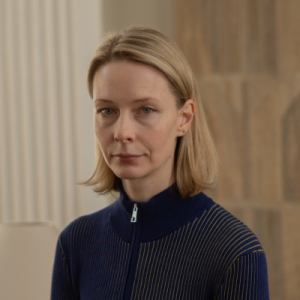 Jolanta Sendaitė-Paulauskienė is an artist whose research focuses on hydrofeminism. Through weaving, I investigate materiality, textile memory, and tactile sensitivity. Rooted in slow-making and autoethnographic methods, my practice forms intimate, reflexive structures and fragile connections. It further engages water as a fluid, ever-shifting system intertwined with femininity, birth, care, and embodied experience.
Link to the artist’s website: www.sendaite.com
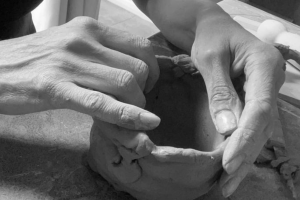 Clay, 2026
Date: August 26 – 29, 2026
Location: Lobby of the Conference Center
Project description:
“Hiding in Plain Sight” by Jude Smit is a sculpture that explores the complexity of inner feelings and emotions that are often masked or hidden. The English dictionary defines the phrase ‘hiding in plain sight’ as, “to not be noticed despite being in a place where it is easily possible to be seen”. The small-scale vessel communicates how tightly held inner feelings of despair can be and how these can go unseen, unheard and unspoken. The plain, unglazed outer and the size of the piece are symbolic, as its small size requires people to look closely in order to fully see what is contained inside, as well as how small and insignificant someone can feel. It has been made specifically for the conference and draws on experience of many years working with, and researching, trauma and suicidality and aims to honour the silent voices of lived and living experience.
The sculpture ties in with the conference workshop taking place on 28 August, where participants will have the opportunity to reflect on their own processes as researchers, practitioners, and advocates for people with lived and living experiences of suicidality. They will be invited to make a small container themselves with a hidden core, exploring symbolically and sculpturally, using metaphor and imagery to aid communication.
About the Artists:
Jude Smit uses a variety of art forms in her creative work, drawing on a wide range of training and experience in the visual arts, performance arts and as a poet. She is interested in the use of metaphor and creative ways to reflect upon and communicate what goes unseen, unheard and unspoken. She is a senior lecturer for a Masters in Integrative Arts Psychotherapy, a psychotherapist, an integrative arts psychotherapist and researcher. She has a particular interest in working with trauma and under-represented voices and has been involved in various research projects and advocacy work within the education and health sectors over the last 20 years. Jude actively promotes the value of the arts as a means of engaging unspoken voices.
Participation is free of charge for all registered ESSSB21 participants. However, advance registration is required, as the number of participants is limited.
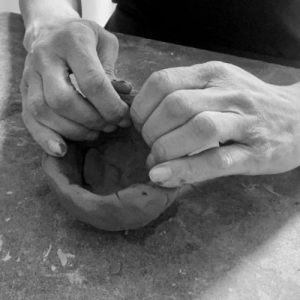
Date: August 28, 2026
Time: 09:00 – 13:00
Room: Ceramics studio “Molinė Virtuvė”, J. Jasinskio st. 7
Organised by:
Jude Smit,
Project description:
This workshop will provide an opportunity to reflect creatively on what it means to hold the stories of lived and living experiences of suicide. Much goes unspoken and as researchers, practitioners and advocates for people with lived and living experiences of suicidality, part of our reflexivity is to acknowledge not only what we bring to the work, but also what we hold from the work. The arts are powerful media that transcend the spoken word and connect with these unspoken processes. The workshop will incorporate arts-based and visual methods through the medium of clay and will aim to use haptic perception as a means to deepen our connection and find a visual form to communicate. You will explore the use of metaphor and imagery and be invited to create a container with a hidden core, which will be displayed as part of the conference experience. No previous artistic experience is required, and all pieces will be equally valued. Following an introductory activity and demonstration, we will spend most of the workshop creating, with group reflection at the end. To honour our hosting country, we will be using national Lithuanian black ceramic that dates as far back as the Neolithic era. The clay turns black during the firing process and was used to create vessels for practical, everyday purposes, as well as urns for ashes. At the end of the conference you will be welcome to take your unfired piece home with you. Any remaining clay works will need to be disposed of once the conference has ended.
About the Artists:
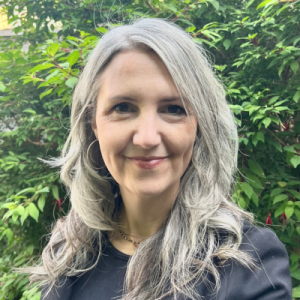 Jude Smit uses a variety of art forms in her creative work, drawing on a wide range of training and experience in the visual arts, performance arts and as a poet. She is interested in the use of metaphor and creative ways to reflect upon and communicate what goes unseen, unheard and unspoken. She is a senior lecturer for a Masters in Integrative Arts Psychotherapy, a psychotherapist, an integrative arts psychotherapist and researcher. She has a particular interest in working with trauma and under-represented voices and has been involved in various research projects and advocacy work within the education and health sectors over the last 20 years. Jude actively promotes the value of the arts as a means of engaging unspoken voices.
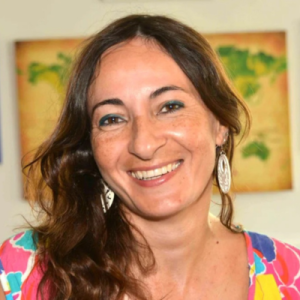 Erminia Colucci is Professor of Visual Psychology and Cultural & Global Mental Health at Middlesex University London and Adjunct Professor at Gadjah Mada University, Indonesia. Her research focuses on human rights and mental health, suicide and suicide prevention, domestic violence, and the lived experiences of people affected by mental illness and suicidality, particularly in low- and middle-income countries, ethnic minority, and refugee communities. She has a particular interest in arts-based and visual methodologies, including participatory visual methods and ethnographic filmmaking, and actively promotes the involvement of people with lived experience in research, advocacy, and suicide prevention. Her work has informed policy and practice internationally, and she has served as a consultant for organizations including Médecins Sans Frontières, Save the Children International, and the Italian Psychological Association.
Dates and times:
- August 27, 16:00 – 17:30
- August 28, 16:30 – 18:00
- August 29, 9:00 – 10:30
Location: Room Eta
Project Description:
One of her first sociology classes was about Émile Durkheim’s classic On Suicide. The topic frightened her. She didn’t know anything about it, nor did she know anyone personally who died this way. But she became fascinated. Not by the topic, but by what C. Wright Mills called the sociological imagination: the ability to connect seemingly individual experiences like suicidality and society at large.
Yet a decade later she found herself time and again on New York City’s George Washington Bridge. All the while repeating ‘I don’t want to go on.’ The bridge stands majestically above the Hudson River. Tall and strong, the steel nice to touch, its sprawling view stunning. A comforting last sight, she thought.
Today, in her project Heavenly Joy, Deadly Sorrow (2026), she explores ways to visualize first-person suicidal narratives and to gain multimodal insight into facing suicidal thoughts and imagery throughout the suicidal process. Connecting her own real-time experiences and unwavering love for visual sociology and video art, she created a one-hour five-screen video installation, supported by media art specialist Ramon Coelho.
This work is also part of her PhD at the Story Lab of the University of Twente and serves as a prelude to the design of a video art research tool. In Vilnius she invites you to the preview screening of the video installation and to join her oral presentation and flash talk.
About the Artists:
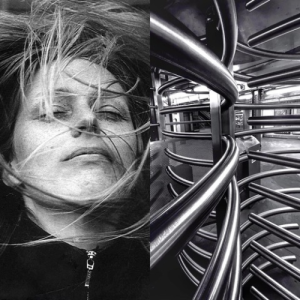
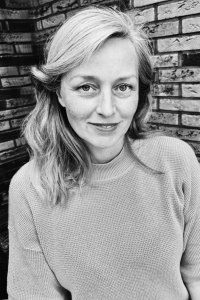 Evelien Amende is a Dutch visual sociologist and video artist. In her Studio for Sociological Imagination, she pursues narrative, ethnographic and artistic research on the topics of family-, sex-, urban-, and suicidal life. She studied Cultural Sociology and Social Work in Amsterdam and New York. Her PhD on visualizing first-person suicidal narratives is carried out at the University of Twente. Feel free to get in touch: studio@sociologicalimagination.com or e.m.c.amende@utwente.nl
Ramon Coelho is a video and media art specialist based in Amsterdam. Starting at MonteVideo, the first Dutch video art gallery, he has become skilled in all aspects of video production, as well as installation and exhibition design. He was head of post-production at the Netherlands Media Art Institute and built video editing and preservation studios in Mexico. Among the artists he works with are Marina Abramović, Francis Alÿs, Rineke Dijkstra and Carlos Amorales. www.videoprojects.nl
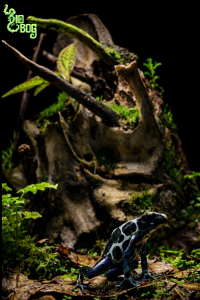 Organic materials, flora and fauna, 2026
Date: August 26 – 29, 2026
Room: Alfa hall
Project description:
Nature, guarding the principles of both eternity and finitude, has inscribed the human body with a dense network of roots and mycelium, granting us the ability to know its sap – to feel, touch, smell, see, taste, and hear. It gives us the capacity to seek, discover, and understand ourselves, as well as to witness its labour: creation that endures forever.
Within nature, I discovered my calling by sharing in its creations and preserving them in capsules of time that cradle the ever-smouldering beauty of the natural world and its fragile might. A fragment of nature enclosed within a glass vessel continues to live, sustained by an almost imperceptible engine – the decomposers that safeguard the closed ecosystem, together with water and organic and inorganic matter.
The mechanism of such a time-capsule ecosystem also reflects one of nature’s own creations – the human being, with its intricate structure and often invisible inner processes. Nature, like the human person, is protected by the harmony of manifold processes, whose preservation requires exceptional care and attentiveness. When these unseen processes are disturbed, both the grandeur of nature and human vitality gradually begin to fade.
About the Artist:
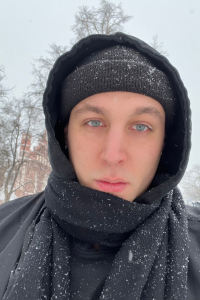
My name is Lukas, a creator of bioactive terrariums, nature enthusiast, and self-taught artist. Since childhood, I have been fascinated by natural processes, exotic animals, and the complex relationships that exist within living ecosystems.
Fifteen years ago, I immersed myself in the fascinating world of exotic animals, studying them firsthand and observing their physiological processes. In recent years, however, my passion has shifted toward exotic tropical plants, which inspired me to explore the creation of living, bioactive ecosystems and, therefore, terrarium artistry. My work brings together biology, ecology, design, art as well as contemplation of a continuos and uninterrupted cycle of life and death. I see each terrarium as a living ecosystem – living and breathing organism captured in a time capsule, where nature unfolds itself at its own pace.
My creations are inspired by natural processes, the eternal interplay of life and decay, and the desire to reveal beauty in places where it often goes unnoticed. Through living installations, I invite viewers to pause, observe, and reconnect with the natural world, which can become one’s shelter.
Link to Lukas’ Instagram: @bio__bog
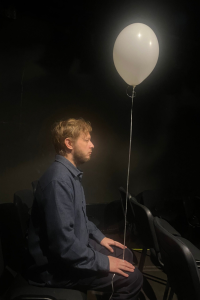 vocal performance, duration approx. 30 mins. (Premiere)
Performers: Melos (Viktorija Šedbaraitė, Ūla Zemeckytė and Justina Leinartaitė-Gaidamavičė).
Date: August 27, 2026
Time: 17:30 – 18:30
Room: Alfa hall
Project description:
The text of „How to Take Flupentixol“ is an excerpt from the patient information leaflet accompanying the antipsychotic-antidepressant medication Flupentixol. This musical composition is written for three voices that sing together, with one another, and around one another. The voices overlap, interrupt, displace, surround, expel and invite one another back, continually negotiating the instructions for taking the drug as an unstable ground upon which a shared ritual emerges.
About the Artist:
Arturas Bumšteinas (Composer, b. 1982) is working in the fields of experimental music and sound art since the end of the 90’s. He was first Lithuanian artist to use vocal materials sourced from people of the internet to make his music. He released around numerous albums, held exhibitions and performances in Lithuanian National Art Gallery, Vilnius’ Contemporary Art Center, Mac/Val Museum, Haus der Kunst Munchen, Lithuanian National Drama Theatre and many festivals around Europe. Bumšteinas was artist in residence in DAAD Berliner-Kunstler-Programm, Museums Quartier in Vienna and Camargo Foundation in Cassis. In the year 2021 in J. Miltinis Drama Theatre he staged a theater play where he employed (in its entirety) the information leaflet of yet another antidepressant, Venlafaxine, which functioned as a libretto for the sung theatre performance. Last year Arturas was nominated for the Lithuanian National Culture and Arts Prize but didn’t get it in the end.
Link to the artist’s website: https://arturasbumsteinas.com/
Date: August 26, 2026
Time: 11:00 – 12:30
Room: Omega
Organised by:
Dr. Austėja Agnietė Čepulienė
Project description:
During the workshop “Cultural Resources in Suicidology: Working with Sutartinės,” I will invite participants to sing together UNESCO-recognized sutartinės (a specific genre of Lithuanian folk songs) and to reflect on this experience as a potential resource for us as suicidology researchers.
Suicidology is a field in which themes of death, grief, and psychological suffering are always present, often evoking complex emotions and, at times, personal or traumatic memories. I find cultural resources to be especially important in fostering resilience – both for myself as a researcher and practicing psychologist, and for others who may need it.
Why sutartinės? This unique Lithuanian polyphonic singing tradition – where two to four voices perform different melodies simultaneously – embodies the idea of sutarti, “to agree.” It offers a lived experience of holding difference while remaining in authentic connection, a process known in psychology to be deeply restorative. In a field such as suicidology, where themes of grief, suffering, and trauma are ever-present, such experiences may support researcher resilience. In addition, the archaic, often archetypal lyrics of sutartinės reflect fundamental patterns of human experience. In this workshop, participants will engage with these songs as cultural and psychological resources, exploring the personal meanings and inner processes they evoke.
About the Artist:
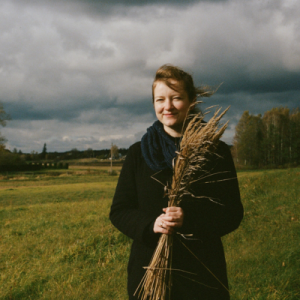 I am an assistant professor at Vilnius University, working as a psychologist and suicidology researcher. In my private practice as a psychologist and a candidate Jungian psychotherapist, I explore Lithuanian folk songs and sutartinės as resources and stimuli for accessing inner cultural and archetypal strengths in times of need.
I am also the creator of the concept of “Ethnotherapy” – a group-based practice in which we sing Lithuanian folk songs and sutartinės while exploring emerging psychological themes, their interactions, and how they can be supported and enriched through the power of ethnic music.
Link to the artist’s website: www.cepuliene.lt
Link to the song performed by Austėja: https://www.youtube.com/watch?v=ry2mrjIpJII